Landed properties in Singapore are often perceived as symbols of status and exclusivity due to their substantial price tags. They might be the perfect home for some, with clear advantages over other property types, such as enhanced privacy, and the ability to fit more family members under the same roof.
Landed properties in Singapore are often perceived as symbols of status and exclusivity due to their substantial price tags. They might be the perfect home for some, with clear advantages over other property types, such as enhanced privacy, and the ability to fit more family members under the same roof.
However, the landed property market often holds a high barrier to entry. This is due to their scarcity, which in turn drives their prices upwards.
As of 2Q 2025, the median price for a resale landed home stands at about $4.5 million. Compared to a decade earlier, this is a substantial increase, given that its cost was substantially less – at $3 million in 2015.
However, what exactly goes into the cost of buying your landed home, aside from the land plot itself? There is a slew of extra costs which might not be apparent to first-time landed homeowners.
We have compiled a checklist that you should go through when considering your first landed property purchase. Take note of them to maximise the value of what you spend, while minimising unnecessary costs.
- Freehold vs Leasehold: Which to Pay For?
- How Many Rooms Do You Need: Four Bedrooms Often a Necessity
- Be Aware of Rebuilding Costs
- Understand the Timeline for Extensive Renovations
- Traffic Considerations
- Constructing Extra Features
Freehold vs Leasehold: Which to Pay For?
Although a basic and rudimentary consideration, the choice between freehold and leasehold landed homes fields a wide enough price gap that determines how you proceed with the purchase and subsequent rebuild.
As a brief overview, here are the differences between the two tenure types when it comes to landed homes at a glance:
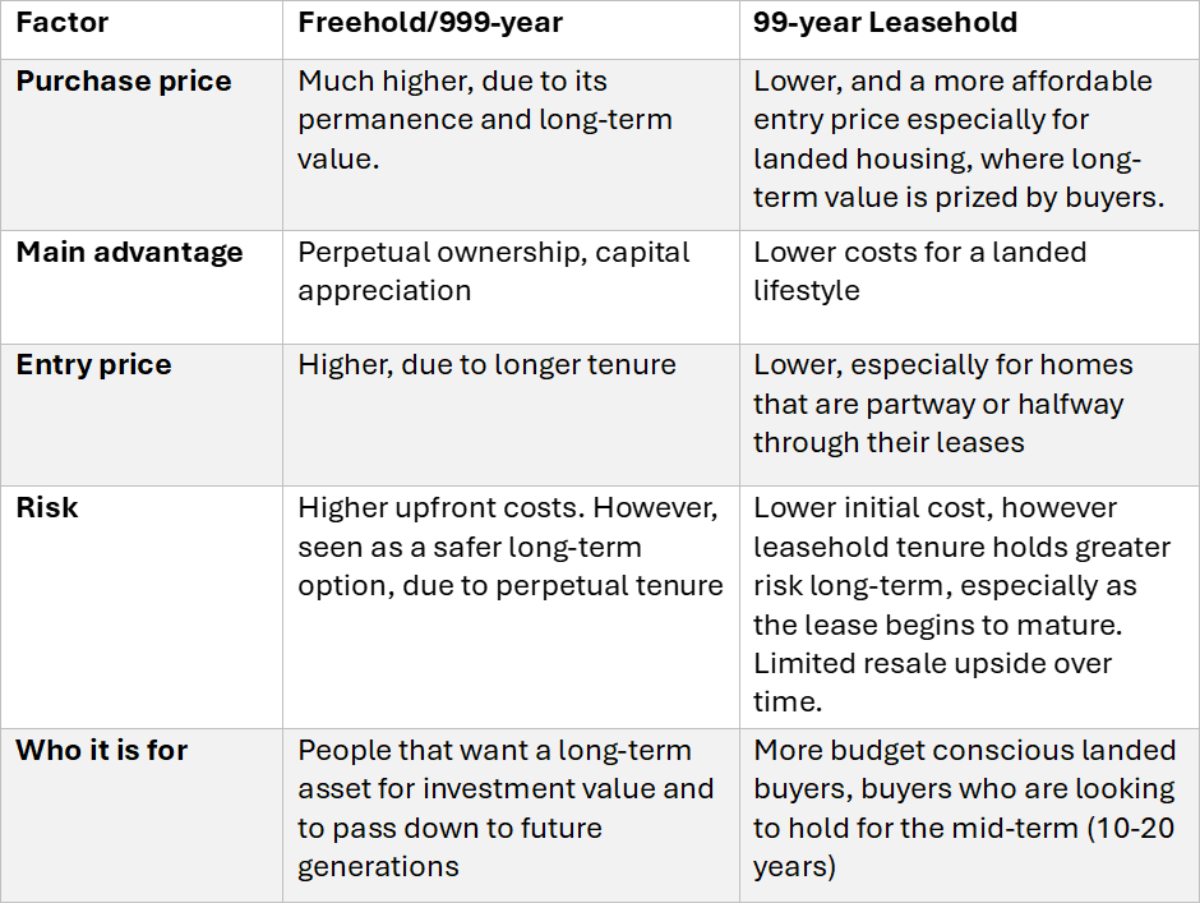
While there are other factors that can strongly influence the cost of landed homes, such as whether they are in the CCR, RCR, or OCR, tenure is generally one of the biggest cost differentiators when it comes to choosing a landed home or plot to buy.
Having a clear motivation and understanding on what kind of landed home is suitable for you can be important in allocating your budget. For example, if understanding that you might want to right-size to a smaller, or non-landed home in the future, buying a leasehold landed at a lower entry price might be the better move, especially if you are planning to cash out in around a two-decade horizon. This might unlock more funds for your renovation, family holidays, or retirement, for example.
How Many Rooms Do You Need: Four Bedrooms or More Often a Necessity
The most common reason behind a landed upgrade, is often to accommodate for larger households.
With an abundance of 2- and 3-bedroom HDB and condo projects on the market, there are not many options for larger family sizes. While 4- and 5-bedroom condos are available, they tend to be pricey and lack the flexibility of a landed property. Landed properties also have the option to distribute multiple bedrooms over two or even three floors, making living in a large household more private.
Hence, building more bedrooms into a landed home could also positively impact its resale value.
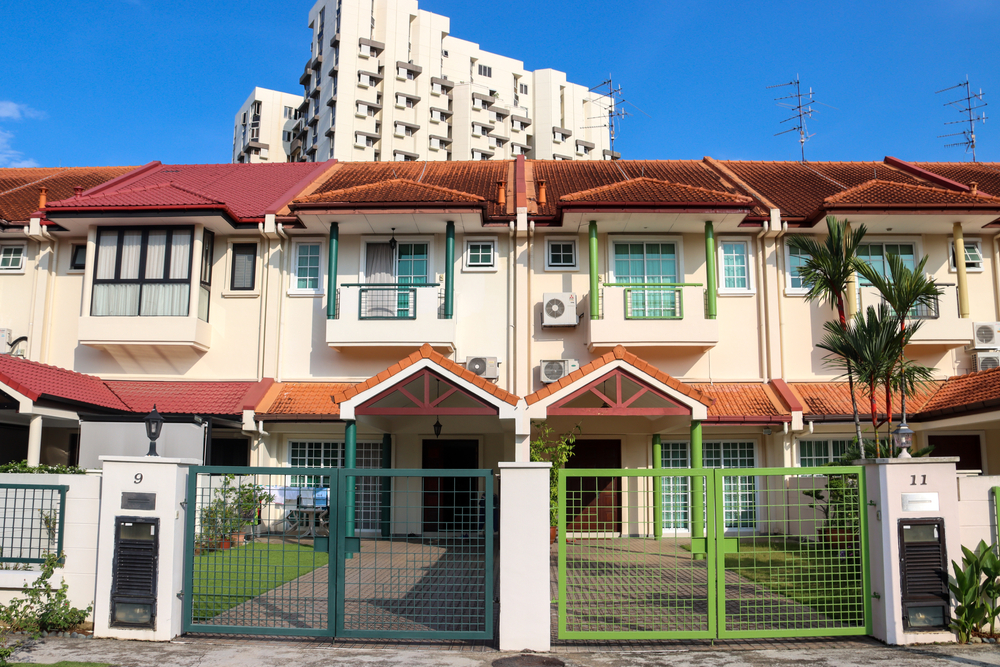
It is common to have a bedroom or two on the ground floor – this provides elderly household members with more convenient access to shared spaces. Helper’s rooms are also commonly included on the first floor of such homes.
With the degree of flexibility that landed homes have to offer, it is not uncommon for their owners to look for a complete rebuild if the current layout does not suit their lifestyle.
Be Mindful or Rebuilding Costs
This rebuild can be costly. Aside from the initial financial calculations, starting from around the $3m barrier for entry for a leasehold terrace house, there are many additional costs when it comes to purchasing a landed home.
The most obvious and upfront cost (aside from the purchase of the actual land deed itself) is the cost for renovation.

This renovation process can be minor, from touching up older features of the house knocking down or putting up a few walls, all the way to a major and extensive rebuild of the property. This is commonplace for older homes, which often contain fewer rooms or only a single storey.
According to RLB, the rebuild costs ranges from approximately $300-$450 per square foot. Rebuilding a terrace house may range from upwards of five hundred thousand to a million. With premium fittings, rebuilding the same development can easily cost anywhere from above one million.
Table 1: RLB construction cost data for landed residential properties

Aside from this, there are many periodic upkeep expenses, such as the cost of landscaping and gardening, maintenance of plumbing, electrical and roofing, as well as the servicing of any elevators or large household appliances. In an apartment building, most of these tasks are managed by either neighbourhood Town Councils or the managing body of a private condo. But as the owner of your own land, it’s purely do-it-yourself – or pay someone to do it for you.
Hence, before you jump into buying a landed property, it is wise to review not just the upfront costs, but also the cumulative expenses that will add up over time.
Understand the Timeline for Extensive Renovations
Renovating a landed home in Singapore is a significantly more complex task than compared to renovating a HDB flat or condo. This is due to factors such as stricter building regulations and structural limitations arising from the specific requirements of landed property.
Older homes may feature layouts that do not utilise the space to its fullest potential, and may feature deteriorating infrastructure, such as roofing and plumbing, which may result in higher maintenance costs and compounded issues down the road. As a result, a full rebuild of the house might be the most sensible option.
The timeline of this renovation/construction is often an important consideration for landed homebuyers. While most homebuyers would want to move into their dream home as soon as possible, most landed rebuilds take at least one to two years on average.
In this situation, most homebuyers will take one of two options for a temporary accommodation: either to stay in another family member’s household, or rent a place of their own, until renovations are complete. This is because most Singaporeans would opt to sell their homes first before buying a landed home – in order to avoid paying the ABSD fee, which is tied to the hefty prices that come with a landed home.
Constructing Extra Features
Owning at least one car is generally considered standard for landed homeowners, given the need to travel outside their estates. This leads to a different set of requirements and preferences in regard to connectivity, accessibility, and transportation.
As landed zones are located within regular residential zones, it is imperative that the location of the landed house is accessible by roads. Considerations that landed homebuyers often have in mind are how many turns/roads it takes to reach the main road or closest expressway and how crowded the conditions of these roads are at peak timings of the day.
While it is a case-by-case basis for every landed estate, a landed home that is only two to three quiet turns away from the main road might fetch more demand than one by the main road which sees heavy vehicular and foot traffic, especially at peak hours.
Depending on one’s lifestyle and preferences, knowing what you want out of your commute can better inform you on your buying decisions, and help decide whether to save or fork out more for greater convenience.
Don’t forget the extra details
Lastly, landed homes, with all their scarcity and opulence are indeed luxury properties. Therefore, people have their niche needs and wants when it comes to these homes.
Some people have multiple household members that require their own personal vehicle for transport nowadays. While most landed homes have space for about one to two cars through a combination of on-site and roadside parking, those that are looking to own upwards of three to four vehicles might need to look into custom parking arrangements built into their land plot itself.
Another increasingly common trend is that of lifts, which are growing increasingly popular – not only for households with elderly members. Having a new and well-maintained lift already built into the house is a definite plus for buyers that are looking for a ready-to-move-in home.
While there are many other niche additions, such as a wine cellar or a swimming pool, these are the ones most commonly incorporated into a landed home. Being clear about your desired features will make it easier to select a landed plot that suits your plans – and also, your budget.
Conclusion
With landed prices constantly growing amid a consistent demand, homebuyers often find themselves at a crossroads, on whether or not the ‘final’ upgrade to landed is indeed worth the money.
Hopefully this article has provided some insight into the lifestyle and considerations of landed homebuyers, allowing you to make the right decision on whether it is a good time to invest in a landed home.
If you have any further questions, feel free to reach out to an ERA Trusted Adviser today!